Some of the Best Exercises for Strengthening the Transverse Abdominis (TVA)
- Karen Jones
- Jun 24
- 3 min read


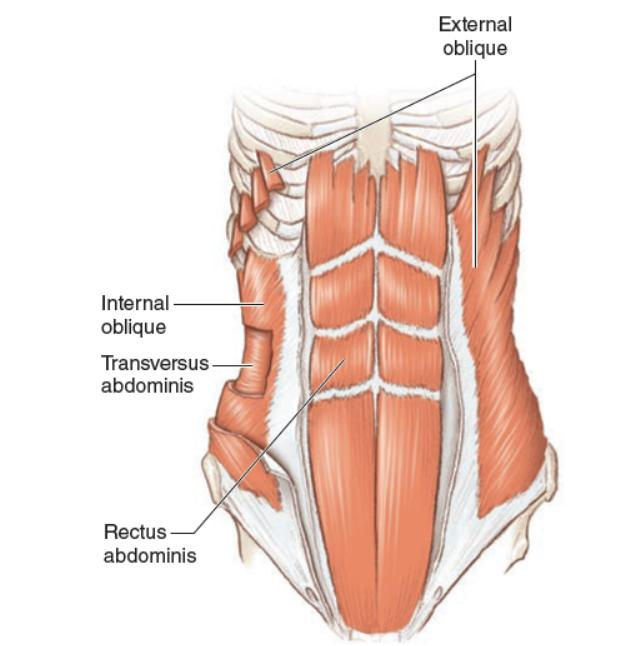
Because the transverse abdominis (TVA) is a stabilizing muscle, it responds differently than muscles designed primarily for movement. Traditional abdominal exercises such as sit-ups and crunches mainly target the rectus abdominis, while TVA training focuses on creating stability, maintaining proper posture, and supporting the spine.
The goal of TVA exercises is to teach the body to engage the deep core muscles while breathing normally and maintaining a stable spine.
Diaphragmatic Breathing with TVA Activation
Before strengthening the TVA, it is important to learn how to activate it.
How to Perform:
Lie on your back with your knees bent and feet flat on the floor.
Place one hand on your chest and the other on your abdomen.
Inhale slowly through your nose.
As you exhale, gently draw your belly button toward your spine without holding your breath.
Hold the contraction for 3-5 seconds.
Repeat 10 times.
Benefits:
Improves awareness of TVA activation.
Coordinates the TVA with the diaphragm.
Builds the foundation for more advanced core exercises.
Abdominal Bracing
Abdominal bracing teaches the TVA to stabilize the spine during movement.
How to Perform:
Stand or lie comfortably.
Imagine someone is about to lightly poke you in the stomach.
Tighten the muscles around your waist without sucking in your stomach.
Continue breathing normally.
Hold for 10 seconds and repeat 10 times.
Benefits:
Improves spinal stability.
Helps protect the lower back.
Mimics the way the TVA functions during daily activities.
Dead Bug
The dead bug is one of the most effective TVA exercises because it challenges core stability while moving the arms and legs.
How to Perform:
Lie on your back.
Raise your arms toward the ceiling.
Bend your hips and knees to 90 degrees.
Engage your TVA.
Slowly lower one arm and the opposite leg toward the floor.
Return to the starting position and switch sides.
Benefits:
Improves core control.
Strengthens the TVA while protecting the lower back.
Enhances coordination.
Bird Dog
The bird dog trains the TVA to stabilize the trunk during movement.
How to Perform:
Begin on your hands and knees.
Engage your TVA.
Extend one arm and the opposite leg.
Hold for 2-3 seconds.
Return and repeat on the opposite side.
Benefits:
Improves balance.
Enhances spinal stability.
Strengthens deep core muscles.
Heel Slides
Heel slides provide a gentle way to challenge the TVA while maintaining pelvic stability.
How to Perform:
Lie on your back with your knees bent.
Engage your TVA.
Slowly slide one heel away from your body until the leg is nearly straight.
Return to the starting position.
Alternate legs.
Benefits:
Builds lower abdominal control.
Improves pelvic stability.
Ideal for beginners.
Forearm Plank
The plank is a classic exercise that strengthens the TVA along with the entire core.
How to Perform:
Position yourself on your forearms and toes.
Keep your body in a straight line.
Gently draw in your TVA.
Continue breathing normally.
Hold for 20-60 seconds.
Benefits:
Develops total core strength.
Improves posture.
Enhances endurance of the stabilizing muscles.
Side Plank
The side plank challenges the TVA while also strengthening the obliques.
How to Perform:
Lie on one side with your elbow under your shoulder.
Lift your hips off the floor.
Maintain a straight line from head to feet.
Hold for 15-45 seconds.
Repeat on the opposite side.
Benefits:
Strengthens lateral core muscles.
Improves balance.
Supports spinal alignment.
The Key to TVA Training
Many people think they need to feel a burning sensation to know they are working their core. The TVA works differently. Successful TVA training often feels subtle. Instead of focusing on intensity, focus on quality movement, controlled breathing, and maintaining proper alignment.
Remember, the TVA is your body's natural corset. Every time you improve its strength and function, you improve your posture, stability, balance, and ability to move efficiently throughout daily life.
A strong core doesn't start with visible abs—it starts with the deep support system that lies beneath them.


Comments